The Belgian Army and Society from Independence to the Great War by Mario Draper
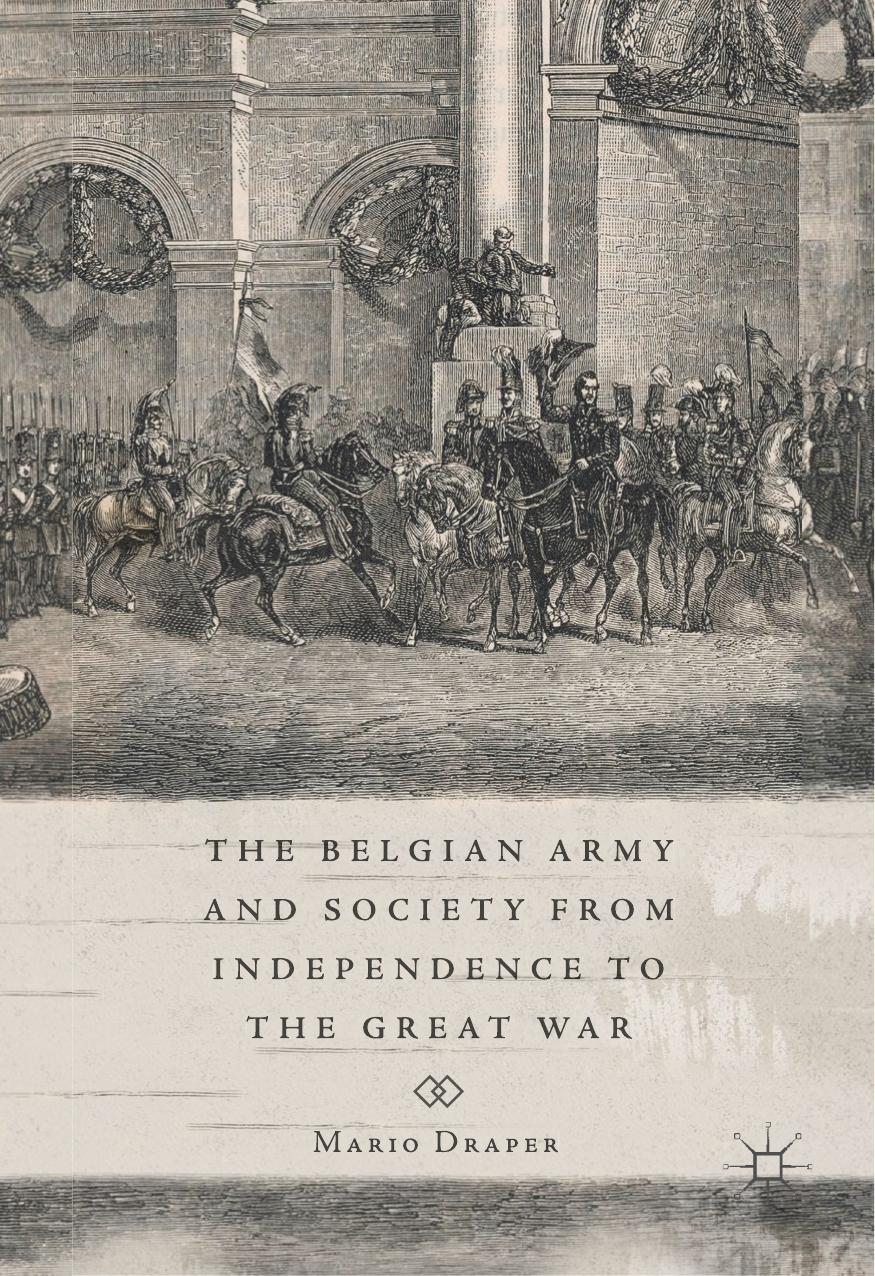
Author:Mario Draper
Language: eng
Format: epub, pdf
Publisher: Springer International Publishing, Cham
The inflammatory remarks attacked not only the Constitutional guarantees protecting the election of officers but also questioned the latter’s ability to adequately fulfil its task. The repercussions reverberated throughout the country, spurring many an indignant Civic Guardsman to pen ripostes defending the institution, within which, as officers, they were proud to serve. ‘They have unanimously decided to protest […] and I agree with all the points in their piece’, wrote the Major-General of the Ghent Civic Guard.59 Although this indignation was to be expected, it could not mask the valid points raised in the pamphlet regarding the organisation of the Civic Guard, which, by extension, questioned its ability to meaningfully undertake either of its roles as an aid to the civil power or as a reserve force to the army.
The timing of the publication ought not to be forgotten in the analysis of its arguments. It formed part of the extensive literature in circulation following another resounding victory of the Prussian military system over what many had considered to be the best army in the world at the time.60 Not surprisingly, European states began a sustained period of self-assessment surrounding their armed forces and sought to emulate, to various degrees, the all-conquering Prussian model. Belgium was no different. Brialmont’s writings were among those calling for the militarisation of society and, more specifically, the introduction of personal service, which increased in prominence as the century ended.61 As previously alluded to, the Recruitment Commission of 1867 was established in the wake of the Austro-Prussian War to discuss many of the same principles. Deliberation concerning the Civic Guard centred on this very debate: to what extent should it act as an internal police force or, as was now the fashion, an equivalent to the Prussian Landwehr?
For those wishing to militarise the Civic Guard, the Constitution, guaranteeing its existence and elections, merely appeared archaic and a hindrance to the establishment of a viable role for the force in the modern world. Brialmont pointed out that its function as a counterweight to a standing army may have been important in an age when it was comprised of mercenaries in the pay of a despotic monarch, but since it had, and would increasingly, become ‘a reunion of honourable citizens, representing all classes of society, they no longer pose[d] any danger to the liberties that they helped conquer and swore to defend’.62 In so doing, he brought the very essence of the Civic Guard’s existence into question, which again prompted swift retaliation. ‘The violent attacks, of which our institution was the object, […] have profoundly affected the officer corps of the citizen militia in Antwerp and will not leave indifferent any good patriot attached to the Constitution, the King, public liberties and our rights’, was the reaction noted by Colonel David, who took great pride in the Civic Guard’s legacy of preserving communal liberties.63 Tradition and heritage dominated the rhetoric of defence. An 1895 letter received by the then Minister of the Interior, François Schollaert, read:The Civic
Download
The Belgian Army and Society from Independence to the Great War by Mario Draper.pdf
This site does not store any files on its server. We only index and link to content provided by other sites. Please contact the content providers to delete copyright contents if any and email us, we'll remove relevant links or contents immediately.
| Africa | Americas |
| Arctic & Antarctica | Asia |
| Australia & Oceania | Europe |
| Middle East | Russia |
| United States | World |
| Ancient Civilizations | Military |
| Historical Study & Educational Resources |
Room 212 by Kate Stewart(5119)
The Crown by Robert Lacey(4814)
Endurance: Shackleton's Incredible Voyage by Alfred Lansing(4780)
The Iron Duke by The Iron Duke(4354)
The Rape of Nanking by Iris Chang(4211)
Joan of Arc by Mary Gordon(4109)
Killing England by Bill O'Reilly(4001)
Say Nothing by Patrick Radden Keefe(3984)
I'll Give You the Sun by Jandy Nelson(3447)
Shadow of Night by Deborah Harkness(3367)
Hitler's Monsters by Eric Kurlander(3342)
Mary, Queen of Scots, and the Murder of Lord Darnley by Alison Weir(3210)
Blood and Sand by Alex Von Tunzelmann(3203)
Eleanor & Park by Rainbow Rowell(3172)
Darkest Hour by Anthony McCarten(3129)
Margaret Thatcher: The Autobiography by Thatcher Margaret(3082)
Book of Life by Deborah Harkness(2938)
Red Famine: Stalin's War on Ukraine by Anne Applebaum(2932)
The One Memory of Flora Banks by Emily Barr(2863)
